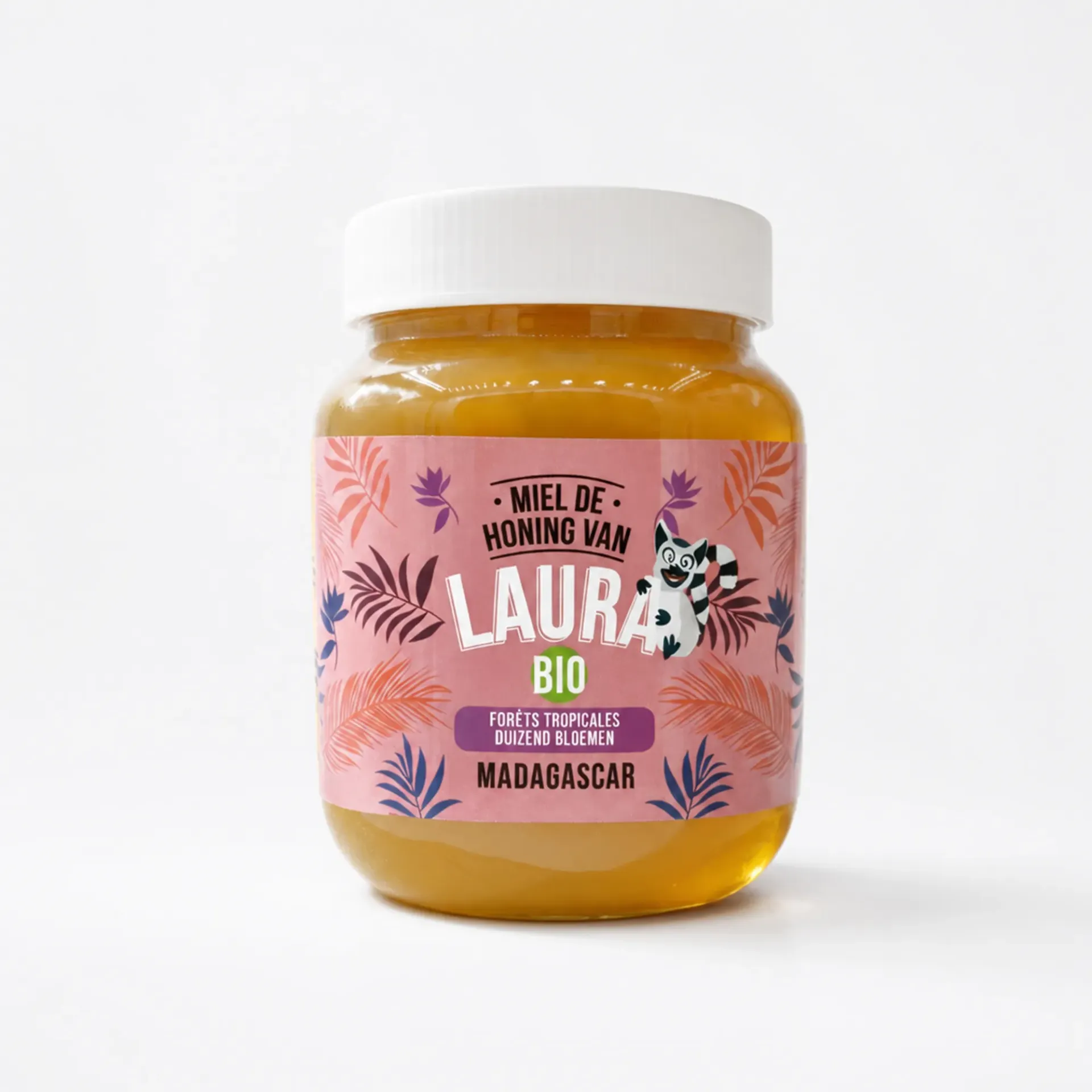


Organic Tropical Forest Honey from Madagascar, 500 g, Miel de Laura
Madagascar
An organic wildflower honey, harvested in the tropical forests of the Manakara region, Madagascar. Mild and fruity, it is a family favourite and works everywhere: on toast, in yoghurt, in hot drinks and in everyday cooking. Light, unbreakable 500 g jar, selected by Laura, our sourcing manager in Antananarivo.
- 100% wildflower honey, certified organic
- Origin: tropical forests of the Manakara region, Madagascar
- Sourced directly from the beekeepers, no middlemen
Honey from Madagascar's tropical forests, for every day
Miel de Laura is our everyday organic honey. The one that stays on the breakfast table and that you never need to save for a special occasion. We wanted it organic, Malagasy and fairly priced: €10 for a 500 g jar. Laura is part of our team in Antananarivo. She manages our sourcing in Madagascar and selects the honeys with the beekeepers. Ilanga Nature is a Malagasy family business: we work directly with the producers, with no middlemen, for vanilla, spices and honeys whose origin we know.
A wildflower honey
In Madagascar's tropical forests, the bees forage on a wide variety of wild flowers. Their honey reflects that diversity: a multifloral honey that varies slightly from one harvest to the next and tells the story of the island's flora. It is harvested in the Manakara region. Light yellow to brown in colour, with a mild, delicate and fruity aroma. It may crystallise naturally over time and become creamy. This is a sign of natural honey, not a defect. To make it runny again, place the open jar in a warm water bath for a few minutes, below 40 °C.
How to use it
• At breakfast: on toast, pancakes, in yoghurt or porridge. Children (from 1 year old) love its mild taste.
• In a hot drink: tea, herbal tea, warm milk. Add it once the drink has cooled slightly to keep its aromas.
• In cooking: brush it over meat, poultry, fish or vegetables before roasting. It gives a lovely caramelised finish and a fruity touch.
• In baking: cakes, cookies, homemade granola. It pairs beautifully with our Bourbon vanilla from Madagascar.
Why a plastic jar?
The 500 g jar is light and unbreakable. It travels safely and keeps your parcel light.
Frequently asked questions
What is tropical forest honey?
It is a multifloral honey: the bees forage on the many wild flowers of Madagascar's tropical forests. Its taste varies slightly from one harvest to the next.
What does this honey taste like?
Mild, delicate and fruity. An easy-going honey the whole family enjoys.
Why has my honey gone hard?
Crystallisation is natural. A few minutes in a gentle warm water bath make it runny again.
How is it different from eucalyptus honey?
Eucalyptus honey has a bolder, lightly minty taste. Tropical forest honey is milder and fruitier.
Do you offer this honey in bulk for professionals?
Yes, contact us at contact@ilanga-nature.com for trade pricing.
Nutritional values
| Energy (kJ/kcal) | 1344/321 |
| Fat (g) | 0.43 |
| of which saturates (g) | 0 |
| Carbohydrate (g) | 78 |
| of which sugars (g) | 71 |
| Protein (g) | 0.7 |
| Salt (g) | 0 |
Compliance
European Directive 2001/110/EC and Belgian Royal Decree of 18/03/2004 on honey.
Traceability
Batch number showing the collection area, honey type, year and month of harvest, and end-of-processing date.
Storage
At room temperature (around 20 °C), away from heat and moisture. Close tightly after use.
Not suitable for infants under 12 months.
Uses
• Breakfast
• Hot drinks
• Cooking
• Baking
Alternative products
These other products may interest you